
Wasps, Hornets & Yellow Jackets in NJ: Why May Is the Best Time to Act
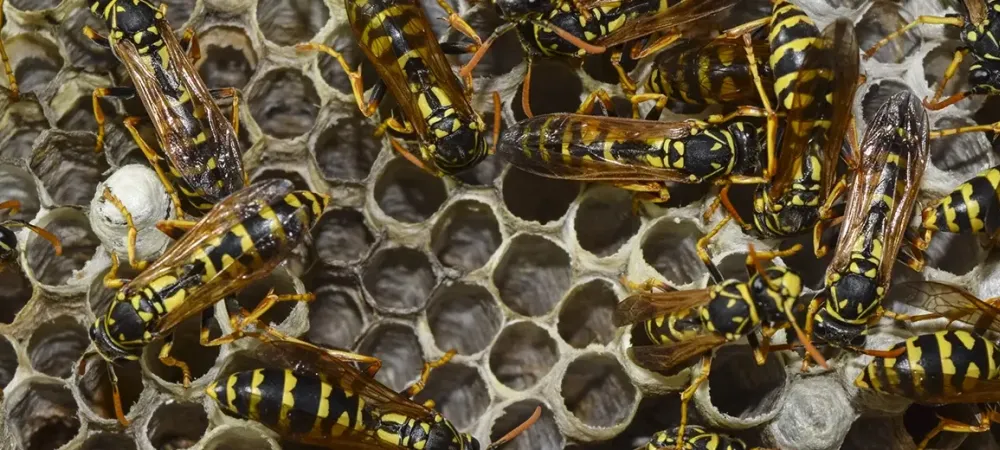
If you've started spotting wasps buzzing around your eaves, porch ceiling, or deck, you're not imagining an early season. Spring 2026 has created ideal conditions for stinging insects across New Jersey, and pest experts are forecasting an active wasp and hornet season ahead. The best thing you can do right now, before colonies grow large and aggressive, is understand what you're dealing with and know when to call a professional.
Frequently Asked Questions About Wasps, Hornets & Yellow Jackets in NJ
Is it too early to worry about wasps and hornets in New Jersey?
Not at all — in fact, late May is exactly when you should be paying attention. Stinging insect colonies in New Jersey start small in spring, when a single overwintering queen begins building a nest and laying her first eggs. Those early nests are far easier and safer to deal with than the large, established colonies that develop by midsummer. A nest that holds a few dozen workers in May can grow to hundreds or even thousands by August. Acting early is both safer and more effective.
What types of stinging insects are most common in New Jersey?
Several species are common in NJ yards and around homes. Knowing the difference matters because they behave and nest very differently:
- Yellow Jackets — Black and yellow, with a sharp defined waist. They nest in the ground, inside wall voids, and in dense shrubs. They are among the most aggressive stinging insects in NJ and become increasingly defensive as summer progresses. Vibrations from lawnmowers can trigger attacks.
- Bald-Faced Hornets — Black and white, roughly three-quarters of an inch long. Their large, gray paper nests — which can grow to the size of a basketball — are typically found in trees, bushes, and on the sides of structures. They are highly aggressive when their nest is disturbed and can sting repeatedly.
- Paper Wasps — Reddish-brown or black and yellow with a noticeably thin waist. They build open, umbrella-shaped nests under eaves, door frames, window sills, and deck railings. Less aggressive than yellow jackets, but will sting if the nest is threatened.
- European Hornets — Large, brownish hornets that nest in hollow trees, wall voids, and attics. They are generally less aggressive than bald-faced hornets but can be dangerous near an established nest.
- Carpenter Bees — Often mistaken for bumblebees, these large insects bore tunnels into exposed wood like decks, fascia boards, and fence posts. The males are territorial and may hover aggressively, but cannot sting. Females can sting but rarely do. The real concern is the structural damage repeated nesting causes over time.
Where should I be looking for nests right now?
In May and early June, nests are small and still being built, which means they can be easy to miss. Check these common locations regularly:
- Under roof eaves and overhangs
- Behind shutters and inside exterior light fixtures
- Beneath decks and inside deck railings
- In and around window and door frames
- Inside low-growing shrubs and dense landscaping
- Along fence lines and in ground-level holes in the lawn (yellow jackets)
- In attic spaces, wall voids, and around utility entry points
Early-season nests are often no larger than a golf ball. If you find one now, that's the time to call — not after it's the size of a basketball and the colony is at peak population.
Why are stinging insects more dangerous in summer than in spring?
Colony size is everything. In spring, a new queen may have only a handful of workers defending a small nest. By late July and August, a yellow jacket colony can contain several thousand workers, all of whom will defend the nest aggressively if disturbed. Bald-faced hornet colonies can exceed 700 workers at peak. The larger the colony, the more workers respond to a perceived threat — and the higher the risk of a serious encounter. Getting rid of a nest in May is a fundamentally different — and much safer — situation than dealing with one in August.
Is it safe to remove a wasp or hornet nest myself?
We strongly advise against DIY nest removal for most species, especially yellow jackets and bald-faced hornets. Over-the-counter sprays can agitate a colony without fully eliminating it, triggering defensive stinging behavior. Ground nests in particular are difficult to treat completely without professional equipment, and a disturbed yellow jacket colony can pursue a perceived threat for a significant distance. For people with bee or wasp sting allergies, an encounter with a disturbed colony can be life-threatening.
Paper wasp nests in early spring — when they are very small and the nest has only a few workers — may be manageable with a long-range aerosol spray applied at night. But if you are unsure of the species, the nest is larger than a tennis ball, or the location is hard to reach safely, contact a professional.
What does professional stinging insect removal involve?
Dial Environmental's stinging insect control service begins with proper identification of the species, nest location, and colony size. Treatment approach varies by species — what works for a paper wasp nest on a porch ceiling is different from what's needed for a yellow jacket colony in a ground burrow or a hornet nest twenty feet up in a tree. Our technicians use targeted treatments that eliminate the colony while minimizing risk to your family and the surrounding environment, in keeping with our Choosing Green First® approach. We also take extra care to distinguish between species worth protecting — like honeybees, which play a vital role in pollination — and those that pose a genuine risk to your household.
What if I have bees instead of wasps? Are they dangerous too?
Honeybees and bumblebees are generally non-aggressive and should not be treated the same way as wasps and hornets. They are important pollinators and, in the case of honeybees, are legally protected in many circumstances. If you have a honeybee swarm or established hive on your property, contact us and we'll help determine the appropriate next step, which often involves relocation rather than extermination. If you're not sure whether you're looking at a bee or a wasp, the fire ant blog — Fire Ants: Do They Sting or Bite? — covers how stinging insects use venom defensively, which can help you understand the behavior you're seeing.
Are stinging insects a risk to my lawn and garden as well?
Yellow jackets nesting in the ground can be a serious hazard during lawn mowing and yard work — vibrations are one of the most common triggers for a defensive swarm. If you've noticed unusual activity near a specific patch of lawn or a hole near your foundation, stay clear until a professional can assess the situation. Our lawn care services team is also familiar with identifying ground-nesting activity during routine yard maintenance and can flag it for our pest control division.
Don't Wait Until the Nest Is the Size of a Football
The window to address stinging insect activity while nests are small and manageable is right now. By mid-summer, the situation is significantly harder — and riskier — to deal with.
Dial Environmental has been helping New Jersey families safely remove stinging insects since 1984. Our licensed technicians know the difference between every species common to this region, and we'll handle removal safely and efficiently so your family can enjoy the yard all summer long.